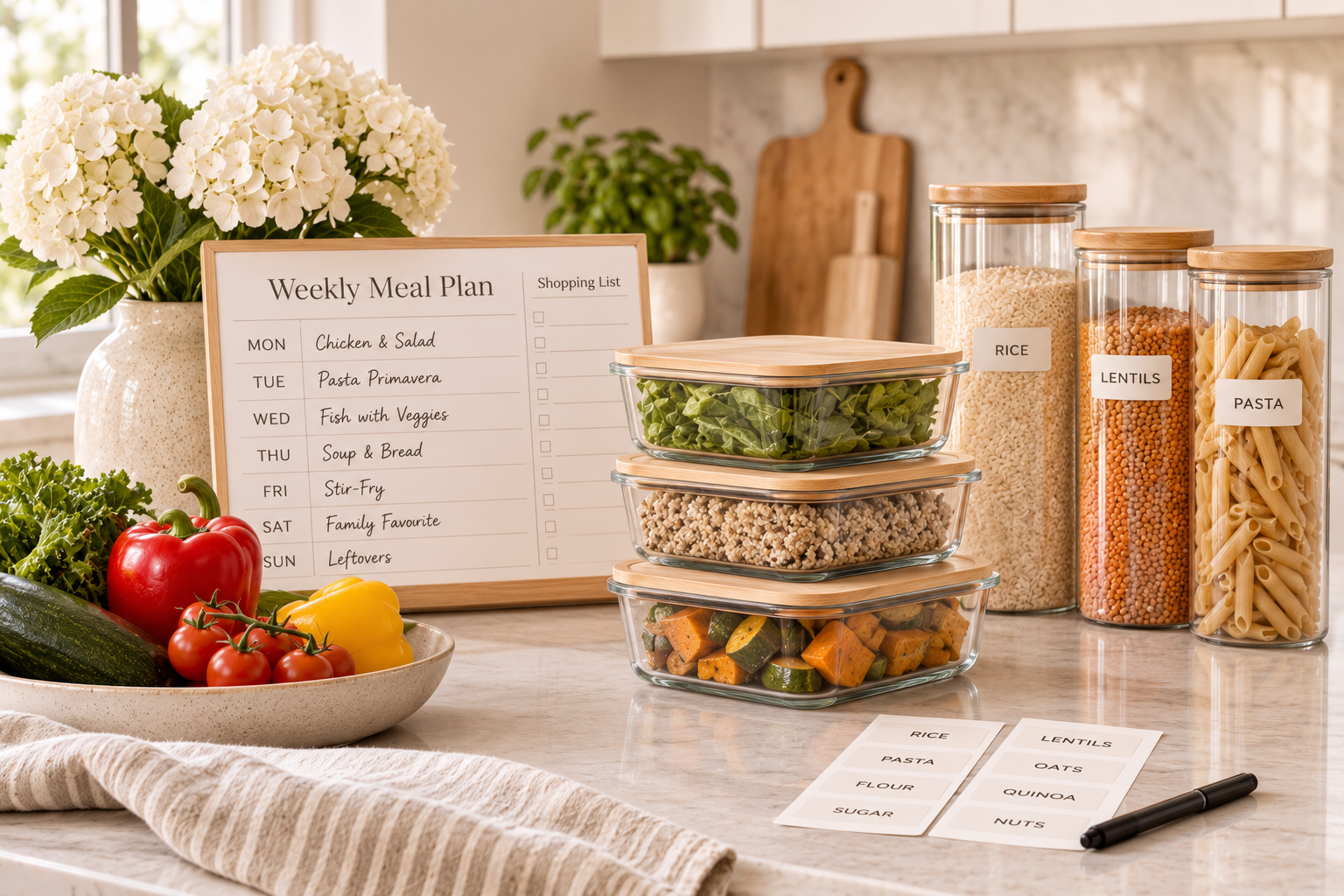
A little planning can make a big difference to how your week feels. Knowing what you're going to cook, having the ingredients ready and avoiding the daily question of “What's for dinner?” can make everyday life much easier.
Meal planning doesn't need to mean preparing every meal in advance or following a strict schedule. It's simply about making a few thoughtful decisions before the week begins, so you have more time and less stress during the week.
Here's how to create a simple meal planning routine that works in real life.
1. Start With a Quick Look at Your Week
Before choosing meals, take a moment to think about the week ahead.
Are there busy days when you'll need something quick? Will you be eating at home every evening? Do you have plans that might change your routine?
Your meal plan should support your actual schedule, not make it more complicated.
Choose simpler meals for busy days and leave more flexible options for days when you have extra time.
2. Choose a Few Meals You Already Love
You don't need seven completely different dinners every week.
Start with a small selection of familiar meals that your household enjoys. You might choose:
Two easy chicken or meat dishes
One fish or seafood meal
One vegetarian meal
One soup, stew or one-pot dish
One flexible meal using leftovers
Repeat favourite recipes whenever it makes sense. Familiar meals are often easier to prepare, and you don't need to reinvent your menu every week.
3. Plan Around Ingredients, Not Just Recipes
One of the easiest ways to simplify meal planning is to use ingredients across several meals.
For example, a tray of roasted vegetables can become a side dish one evening and part of a lunch the next day. Cooked chicken can be used in wraps, salads or sandwiches.
Think about how ingredients can work together before adding everything to your shopping list.
This helps reduce food waste, saves money and makes grocery shopping more organised.
4. Create a Simple Shopping List
Once your meals are planned, check what you already have at home.
Look through your fridge, freezer and pantry before buying anything new. Then make a shopping list based on the meals you've chosen.
Organise it into simple categories:
Fresh fruit and vegetables
Meat, fish and protein
Dairy and eggs
Pantry essentials
Household basics
A clear list makes shopping quicker and helps prevent unnecessary purchases.
5. Prepare a Few Things in Advance
Meal preparation doesn't have to take your entire Sunday.
Even 30–45 minutes of preparation can make the following days easier.
You could:
Wash and prepare some vegetables.
Marinate meat or chicken.
Cook a batch of rice or lentils.
Portion snacks and breakfast ingredients.
Move frozen food into the fridge when needed.
Choose only the preparations that genuinely save you time. There's no need to fill your fridge with containers if that doesn't suit your lifestyle.
Remember to refrigerate prepared food promptly and follow safe storage times.
6. Keep a Few Backup Meals
Not every day goes according to plan. Sometimes you're tired, plans change or you simply don't feel like cooking.
Having a few easy options available can make those moments less stressful.
Keep some freezer-friendly meals, pantry staples or quick ingredients for simple dinners. Eggs, canned beans, frozen vegetables and pasta can become a meal without much effort.
A flexible plan is much more realistic than one that depends on everything going perfectly.
7. Thoughtful Kitchen Finds That Make Meal Planning Easier
You don't need a kitchen full of gadgets to stay organised. A few practical products can make planning, storing and preparing food easier.
A Weekly Meal Planner
A magnetic meal planner or a simple weekly planning pad can help you see the week's meals at a glance. Keep it somewhere visible, such as on the fridge or kitchen wall.
It's especially useful for writing down dinner ideas, noting ingredients you need and keeping everyone in the household informed.
What to look for: A reusable magnetic planner, enough space for seven days and a separate shopping list area.
Glass Food Storage Containers
Glass containers are useful for storing leftovers, prepared ingredients and ready-to-eat meals. Different sizes make it easier to organise everything from chopped vegetables to individual portions.
They can also help you see what's inside the fridge instead of forgetting food at the back of a cupboard.
What to look for: A set with different sizes, secure lids and containers suitable for your intended use. Check whether the lids and containers are dishwasher, freezer or microwave safe.
Stackable Food Storage Containers
For pantry staples such as rice, lentils, pasta, flour and cereal, stackable containers can help make the most of cupboard space.
Clear containers make it easier to see what you have and when something needs replacing.
What to look for: Airtight lids, practical shapes and sizes that fit your shelves.
Reusable Pantry Labels
Labels are a small detail, but they can make an organized kitchen easier to maintain.
Use them to identify dry ingredients, storage dates or meal-prep containers. A consistent labelling system also makes it easier for everyone at home to find what they need.
What to look for: Waterproof, easy-to-read labels that can be removed or replaced when needed.
Our tip: Start with one or two products that solve an actual problem in your kitchen. Thoughtful organisation is about making everyday life easier, not buying more things.
8. Make Meal Planning a Weekly Ritual
Choose one day each week to plan your meals. It could be Sunday morning with a cup of coffee or any quiet moment that fits your routine.
Keep the process simple:
Check your calendar.
Look through your fridge and pantry.
Choose a few meals.
Write your shopping list.
Prepare a few ingredients in advance.
Over time, this becomes a natural part of your weekly routine rather than another task on your to-do list.
Make Everyday Meals More Meaningful
Meal planning isn't about having a perfect menu or spending hours in the kitchen. It's about creating a little more space in your day.
When you know what you're cooking and have what you need, everyday meals can feel less rushed and more enjoyable.
Start small, repeat what works and allow room for flexibility.
A calmer week often begins with a few thoughtful choices made in advance.
