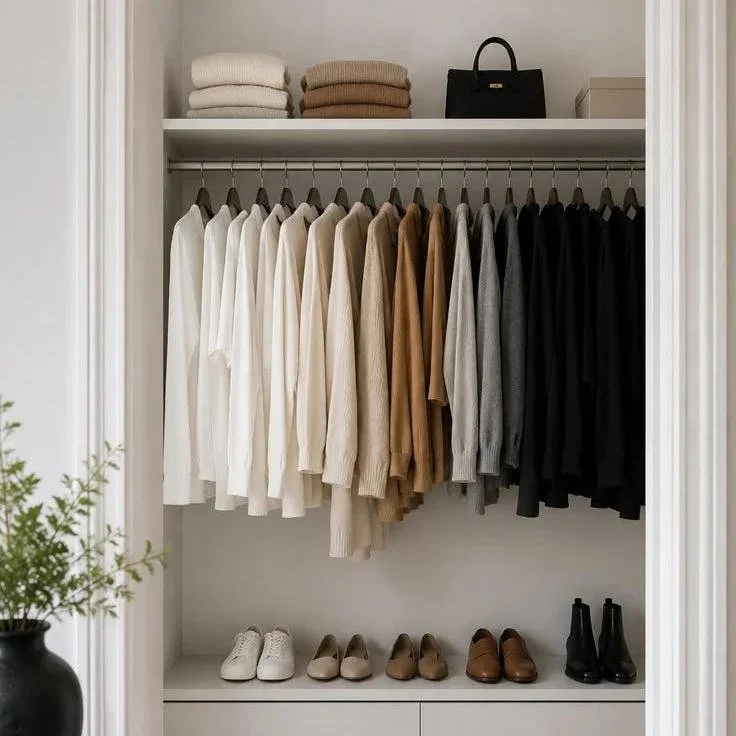
Simple, practical ways to let go of unnecessary things, organize your space and make your home feel lighter.
Have you ever looked around your home and felt like there is simply too much stuff?
Kitchen counters covered with things, wardrobes full of clothes you rarely wear, drawers filled with items you forgot you had and shelves that seem to collect more than they display.
Clutter can slowly build up without us noticing. A few things left out here, something purchased there, and before long, keeping the home organized starts to feel like a never-ending task.
Decluttering isn't about getting rid of everything or turning your home into an empty, minimalist space. It's about creating an environment that feels comfortable, functional and easy to maintain.
The goal isn't to own as little as possible. It's to make room for the things that genuinely belong in your life.
Here are seven simple ways to get started.
1. Start small instead of tackling everything
One of the biggest mistakes when decluttering is trying to organize the entire home in one day.
Looking at a full wardrobe, kitchen or storage room can feel overwhelming, making it easy to postpone the task altogether.
Instead, choose one small area.
Start with a bedside table, a bathroom drawer, one kitchen shelf or your handbag. Complete that space before moving on to another.
Small achievements create motivation and help you build a habit without turning decluttering into an exhausting project.
Try this: Set a timer for 15 minutes and focus on just one area. Stop when the time is up.
2. Ask yourself what you really need
We often keep things for reasons that have little to do with whether we actually use them.
Perhaps we bought something because it was on sale, received it as a gift, or thought we might need it someday.
When deciding whether to keep an item, ask yourself:
Have I used this in the past year?
Does it serve a purpose in my everyday life?
Do I genuinely enjoy having it?
Would I buy it again today?
Do I have something else that does the same job?
You don't have to make every decision immediately. If you're unsure, put the item aside and revisit it later.
The idea is to become more conscious about what you keep.
3. Declutter one category at a time
Sometimes it's easier to organize by category rather than by room.
For example, gather your skincare products from different bathrooms and storage areas. Look at everything together, remove expired products and keep only what you actually use.
You can do the same with clothes, kitchen utensils, towels, books, accessories and cleaning supplies.
Seeing everything in one place helps you understand how much you already own and prevents unnecessary purchases.
A good place to start:
Clothes and accessories
Beauty and skincare products
Kitchen tools and containers
Paperwork and documents
Home décor and decorative items
Cleaning and household supplies
4. Give everything a place
A home is easier to maintain when everyday items have a designated place.
Keys, bags, chargers, remote controls, toys and frequently used household essentials often create visual clutter simply because they don't have a proper home.
Create simple storage solutions that make sense for your routine.
Use baskets for everyday items, drawer organizers for smaller essentials and labelled containers where they genuinely make things easier.
Remember that storage should support your lifestyle, not become another way to hide things you don't need.
5. Be thoughtful about what you bring home
Decluttering isn't only about removing things. It's also about changing the habits that cause clutter to return.
Before buying something, pause and consider whether you really need it.
Ask yourself:
Do I already own something similar?
Where will I keep it?
Will I use it regularly?
Does it fit my lifestyle?
Am I buying it because I need it or simply because it's on sale?
This doesn't mean you should stop enjoying shopping or buying beautiful things for your home.
It simply means choosing more intentionally.
6. Create a simple daily reset
Even an organized home can become messy during a busy day.
Instead of waiting until everything gets out of control, introduce a short daily reset.
Spend 10–15 minutes putting things back where they belong, clearing surfaces, tidying the living area and preparing your home for the following morning.
You can make it part of your evening routine or choose a time that works better for your household.
The aim isn't to keep your home perfect throughout the day. It's to prevent small messes from becoming overwhelming.
7. Let go without feeling guilty
This can be the hardest part of decluttering.
Sometimes we keep things because they were expensive, because someone gave them to us or because we associate them with a particular memory.
But keeping something doesn't mean you have to keep it forever.
You can appreciate a gift without needing to use it. You can remember a special moment without keeping every object connected to it.
If something is still in good condition, consider donating it, selling it or passing it on to someone who could use it.
Letting go can be a positive decision. It creates space for the things that are useful, meaningful and relevant to your life today.
A simple 7-day decluttering challenge
If you want to make a start but don't know where to begin, try this easy one-week plan.
Day 1: Clear your bedside table and bedroom surfaces.
Day 2: Go through your wardrobe and remove clothes you no longer wear.
Day 3: Organize one kitchen cupboard or drawer.
Day 4: Check your skincare, beauty products and bathroom essentials.
Day 5: Clear your living room and organize everyday items.
Day 6: Sort paperwork, bags and miscellaneous household items.
Day 7: Walk through your home, return things to their places and donate items you no longer need.
You don't need to spend hours on each task. Even 15–20 minutes a day can make a noticeable difference.
A calmer home starts with thoughtful choices
Decluttering isn't a race to create the perfect minimalist home. It's an opportunity to understand what you need, what you value and how you want your surroundings to feel.
Start with one drawer, one shelf or one small corner. Make a few thoughtful decisions and give yourself time to build new habits.
You may find that the biggest benefit isn't simply having fewer things. It's having a home that is easier to care for, easier to enjoy and better suited to the life you live.
Because sometimes, creating more space isn't about adding something new. It's about making room for what already matters.
Keep what matters. Let go of what doesn't. Make space for a life that feels lighter.
Ikigai Home
